 EN
EN

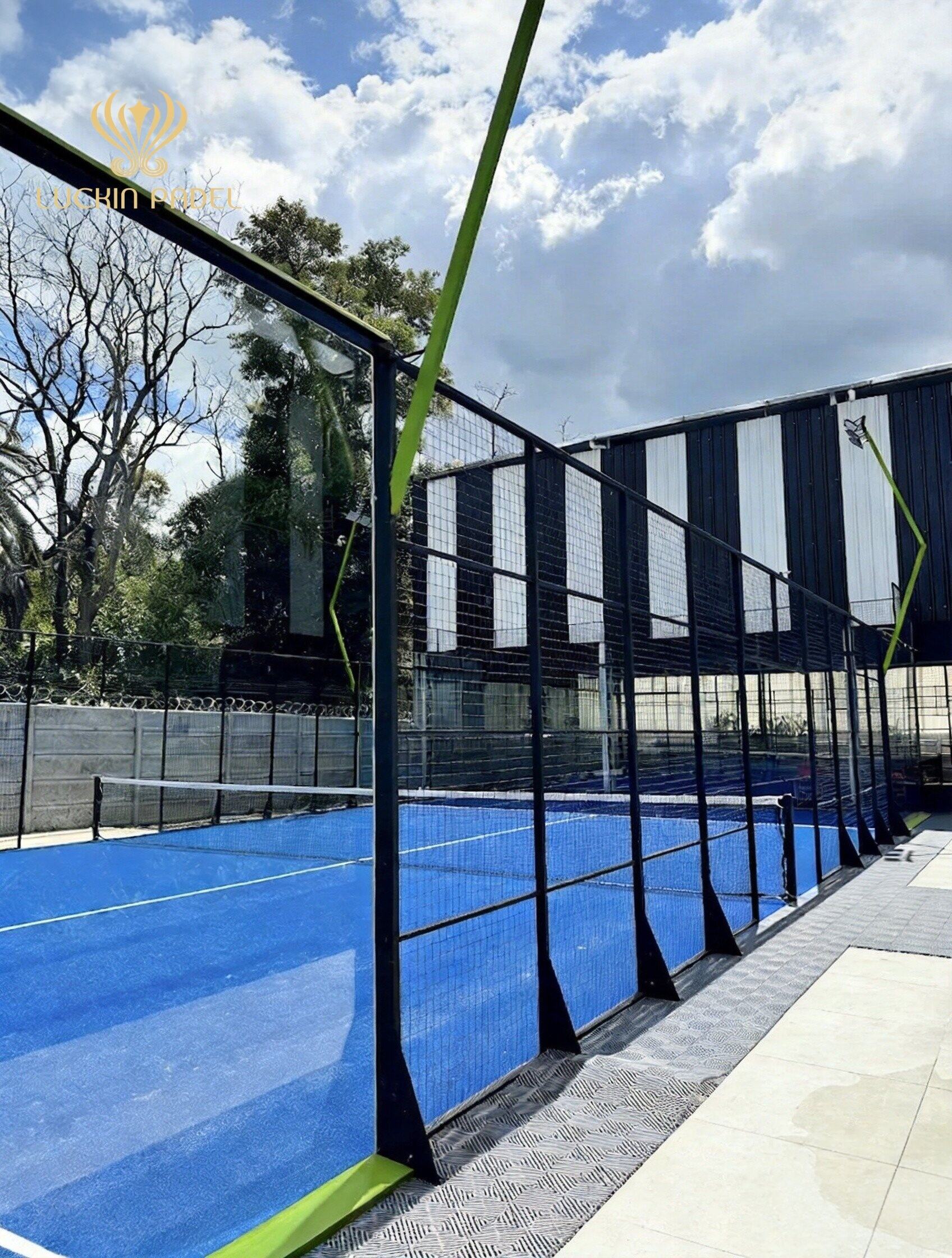
Rigorous Material Sourcing and Certification
SPHC steel: Certified tensile strength and corrosion resistance for structural integrity
All our structural parts start with certified SPHC steel that we source after thorough checks on suppliers. We need these suppliers to meet specific standards for tensile strength at least 270 MPa and good resistance against rust. At our padel court manufacturing facility, we ask for mill test reports on every steel batch to make sure the yield strength and how much it can stretch before breaking stays consistent across all materials used in construction. Independent labs run salt spray tests lasting over 1,000 hours to check if the protective coatings hold up when exposed to really humid conditions. Keeping track of where all materials come from helps prevent any weakening over time and ensures players stay safe because we know exactly how much weight our structures can handle without failing.
Tempered glass panels: EN12150-1 impact testing and optical clarity verification
The backboards feature 12mm thick tempered glass panels that undergo rigorous testing according to the EN12150-1 standard for controlling fragmentation. When broken, these panels produce fragments no larger than 40 square millimeters as required by safety regulations. To check for optical distortion, manufacturers run laser interferometry tests keeping wavefront errors below 0.1mm so players can clearly see where balls are going during play. Any unit found with tiny cracks visible under polarized light gets thrown out before leaving the factory floor. These inspections help prevent those hidden stress fractures that might develop later. The whole process works to maintain both player safety and clear visibility on court, getting rid of those pesky refractive issues that make judging shots difficult during intense matches.
Precision Manufacturing and Assembly Protocols
Our padel court factory implements military-grade precision protocols to eliminate structural variances. Every component undergoes rigorous fabrication controls that exceed industry standards for dimensional stability and corrosion resistance.
Double-spray anti-corrosion treatment with adhesion and salt-spray durability testing
Dual phase zinc aluminum coatings get applied using electrostatic spray methods, then topped off with an epoxy powder coat to form a strong protective layer around 120 microns thick. We test this process according to industry standards like ASTM B117 for salt spray resistance over 1000 hours and ISO 2409 for checking how well the coating sticks to surfaces. These tests show less than 5% damage to the surface area after exposure. Works great from really cold temperatures down to minus 30 degrees Celsius all the way up to 60 degrees Celsius, so it stops rust forming even when exposed to harsh coastal conditions where salt air can be a problem. After everything is done, we run some final checks to make sure everything holds up as expected.
- 98% coating adhesion retention after impact testing
- Zero blistering following 30 thermal shock cycles
- Salt-fog resistance equivalent to 15+ years of real-world exposure
Laser-guided alignment and torque-controlled assembly for dimensional accuracy
CNC-calibrated jigs position structural members within ±0.5mm tolerances using laser projection systems. Critical joints are assembled with digital torque wrenches programmed to precise Newton-meter specifications—preventing over-tightening and associated micro-fractures. This ensures:
- Uniform court diagonals within 3mm variance
- Glass panel gaps under 2mm across all interfaces
- Deck flatness deviations below 1.5mm per 3-meter span
Automated optical scanners validate each stage, flagging components exceeding 0.7% dimensional drift for recalibration—eliminating cumulative errors and maintaining FIAP certification compliance.
End-to-End Quality Assurance and Global Compliance
ISO 9001-certified process control across all padel court factory production stages
At our padel court manufacturing facility, we follow ISO 9001 certified quality management throughout all stages of production, starting from when materials come in right through to putting everything together at the end. We keep detailed records on everything that happens during manufacturing, track any issues as they pop up in real time, and constantly look for ways to get better using statistical methods. Our team does regular checks to make sure dimensions stay pretty much spot on, usually within about 1.5mm either way, and we catch problems early before they become bigger headaches, such as inconsistent welding or coatings that don't stick properly. This whole approach helps cut down on having to fix things later by around a third, and makes sure all parts can handle what they need to without breaking down too soon.
CE marking and FIP/IPF regulatory validation for international market readiness
To get that all important CE mark, courts must go through EU approved certification bodies which check they meet both the Machinery Directive 2006/42/EC and Construction Products Regulation (EU) No. 305/2011 requirements. Courts also undergo separate testing according to FIP standards to make sure balls bounce consistently within about 3% difference, lenses show minimal distortion below 0.1 dioptres, and surfaces resist rust after being sprayed with salt water for almost two full work weeks. This double checking process makes it much easier to sell products in over 40 markets worldwide while still meeting pro tournament standards. The paperwork involved typically consists of translated technical documents, standardized conformity statements, plus official test results accepted by the International Padel Federation.
FAQ
What is SPHC steel and why is it used for padel courts?
SPHC steel is a type of steel known for its tensile strength and corrosion resistance, making it ideal for structural applications in padel courts.
How is tempered glass used in padel courts tested for safety?
Tempered glass panels undergo EN12150-1 impact testing and optical clarity verification to ensure player safety and maintain clear visibility on the court.
What are the benefits of a double-spray anti-corrosion treatment?
Double-spray anti-corrosion treatment offers strong protection against environmental elements, ensuring long-lasting durability and resistance against rust.
Why is ISO 9001 certification important for padel court manufacturing?
ISO 9001 certification ensures consistent quality management and helps to identify and address issues early in the manufacturing process, reducing the need for later fixes.
How does CE marking impact international market readiness?
CE marking indicates compliance with EU regulations, making it easier to market and sell padel courts internationally while meeting industry standards.
Table of Contents
- Rigorous Material Sourcing and Certification
- Precision Manufacturing and Assembly Protocols
- End-to-End Quality Assurance and Global Compliance
-
FAQ
- What is SPHC steel and why is it used for padel courts?
- How is tempered glass used in padel courts tested for safety?
- What are the benefits of a double-spray anti-corrosion treatment?
- Why is ISO 9001 certification important for padel court manufacturing?
- How does CE marking impact international market readiness?