 EN
EN

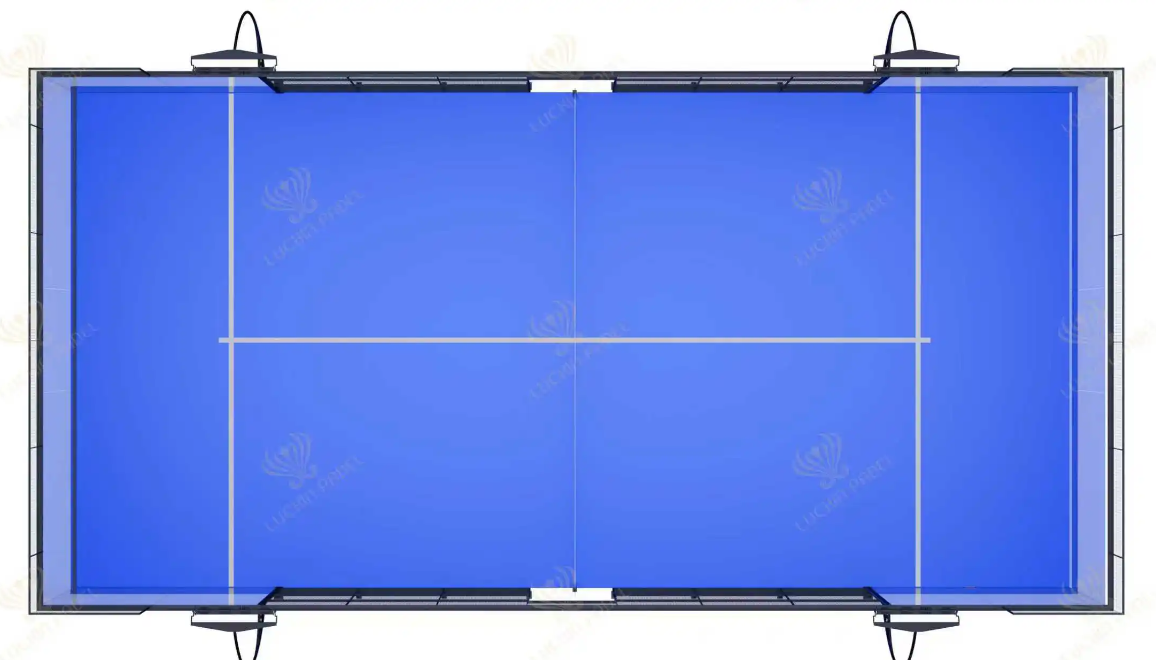
Mastering Padel Court Dimensions and Layout According to FIP Standards
International Padel Federation (FIP) Standards for Court Size
According to the rules set by the International Padel Federation (FIP), doubles matches must be played on a rectangular court measuring exactly 20 meters by 10 meters, which translates to about 65.6 feet by 32.8 feet. Competition courts need to stick pretty close to these dimensions too, within plus or minus half a percent. Why does this matter? Well, it helps keep the ball bouncing predictably and makes sure games are fair no matter where they're played. For singles play, things change a bit. The court gets narrower, going down to just 6 meters wide but still keeping that same 20 meter length. Players get used to these different sizes depending on whether they're playing alone or with a partner.
Official Court Dimensions and Space Planning for Optimal Play
The service lines sit about 6.95 meters away from the net which helps create those balanced zones for serves. The middle line actually goes a bit further out too, sticking out around 20 centimeters past the regular service area so players can aim their shots more accurately. When it comes to glass walls and fencing around the court, there needs to be at least 3 meters of space vertically behind where players stand at the baseline. Some tournaments will go even further with an extra meter or two added on top of that basic requirement just so spectators get a better view without feeling cramped behind the barriers.
Service Lines and Court Markings Accuracy
All court lines must be 5cm wide and use high-contrast coloring—typically white or yellow—on artificial turf or concrete surfaces. Digital laser alignment tools help builders meet FIP’s exacting standards, ensuring service boxes measure precisely 3m – 5m as specified in the 2022 FIP court geometry guidelines.
Tolerance Margins and Construction Precision
Although a ±0.5% dimensional allowance permits minor deviations (e.g., ±10cm in length), critical elements like net height require millimeter-level accuracy: 88cm at the center and 92cm at the posts. Professional installations use galvanized steel templates to position anchor points within ±3mm tolerance, preventing net sag or misalignment.
Structural and Material Requirements for IPF-Compliant Padel Court Specifications
Wall & Enclosure Materials Meeting IPF Compliance
Padel courts certified by IPF standards typically have side and back walls made from tempered glass measuring around 10 to 12 mm thick. This glass ensures balls bounce predictably while also making the court safer for players. Sitting above these glass panels is some kind of metal mesh fence, usually either galvanized steel or powder coated metal, bringing the total height of the enclosure to about 4 meters. Before installation, all these materials get tested for how well they handle impacts. For cheaper setups though, some places opt for fiberglass panels or even reinforced concrete instead, which cuts costs but might not offer quite the same level of performance.
Surface Types and Performance Characteristics
The field surface blends monofilament synthetic grass with about 12 to 13 millimeters of pile height and around 5 kilograms per square meter of silica sand filling. This setup helps players move better on their feet and makes sure balls roll predictably across the ground. Tests show this kind of surface cuts down on stress to joints by roughly 22 percent when compared to traditional resin-based fields, all while hitting those important IPF grip requirements. Some newer versions even have special reinforcement layers underneath the grass itself. These hidden supports stop the blades from flattening out over time and also keep unwanted microbes from growing in there too.
Foundation Requirements for Stability and Safety
For a solid foundation, start with about 15 centimeters of compacted gravel underneath 20 cm of reinforced concrete. Getting this right is important because the ground needs something stable to sit on. The surface should have around a 1.5 percent slope so water drains properly instead of collecting in puddles. At the same time, we need to keep things pretty flat overall, no more than 3 mm variation anywhere on the court surface. And don't forget those underground wires and pipes for lights and other utilities. These need to go in place well before pouring the concrete otherwise they'll compromise the whole structure later on when everything sets.
Fencing and Glass Wall Specifications for Player Safety
Safety glass includes laminated interlayers to prevent shattering, with rubberized trim covering exposed edges. The fencing system uses 4mm powder-coated steel mesh secured with tension cables rated for 1,200N pull resistance. Installation requires 60cm-deep perimeter footings to withstand lateral forces during intense play.
Indoor vs. Outdoor Court Design: Environmental Adaptation and Safety Zones
Height Clearance and Safety Perimeter Guidelines
Indoor padel courts require a minimum 6-meter ceiling height to accommodate high lob shots and overhead lighting, while outdoor installations must maintain 3-meter safety perimeters free of obstacles. These zones reduce collision risks and support safe player movement, especially in multi-court facilities where space is shared.
Recommended Ceiling Height for Indoor Courts
The FIP mandates indoor ceilings ≥6m to ensure proper ball trajectory and airflow. Courts built below this height often require pressurized ventilation systems to manage heat buildup during extended matches.
Weather-Resistant Materials for Outdoor Padel Court Specifications
Outdoor courts use UV-stabilized polycarbonate panels and galvanized steel framing to resist corrosion and weather degradation. Unlike indoor surfaces, outdoor courts employ textured acrylic coatings with 2–3mm silica sand additives, which reduce slipperiness during rain by 40% compared to standard finishes (Sports Surface Institute 2023).
Drainage and Ventilation Considerations in Outdoor Layouts
Positioning courts on a 1–2% natural slope enables efficient water runoff, while permeable shock pads beneath the turf prevent standing water. Forced-air ventilation is unsuitable outdoors due to wind interference; instead, strategic placement of mesh panels promotes natural airflow without disrupting play.
Minimum Safety Zones Around the Court Layout
FIP regulations require 3m buffer zones on all sides to allow for player deceleration and emergency access. In indoor facilities, these zones often double as spectator areas, while outdoor projects may utilize them for landscaping or equipment storage.
Impact-Absorbing Surfaces and Boundary Clearances
Boundary walls incorporate 8–10mm elastomer layers that reduce ball rebound speeds by 15–20%, improving control and safety. The gap between courts and surrounding fences should not exceed 1.2m, ensuring balls remain retrievable without interrupting gameplay.
Lighting, Net Setup, and Playability: Finalizing Competitive Padel Court Specifications
Minimum Lux Levels for Indoor and Outdoor Courts
For proper gameplay according to FIP standards, courts need between 300 to 500 lux of light overall. Most facilities go with LED options these days since they save on electricity bills and spread light evenly without those annoying hotspots we all hate. When it comes to outdoor setups, the lights themselves need to withstand rain and snow, so waterproof construction is a must. They should also sit around 6 meters above ground level to keep shadows from messing up visibility during matches. Indoor courts face different challenges though. The lighting there needs to maintain steady intensity throughout every corner of the playing area, which means careful placement and possibly multiple light sources strategically positioned to avoid dark spots where players might trip or miss shots.
Glare Reduction and Shadow Control in Court Design
Anti-glare fixtures positioned at a 30° angle to the playing surface reduce visual discomfort, and diffusers help soften light intensity. For outdoor courts, mounting poles outside the safety perimeter prevents shadows from interfering with play.
Regulatory Net Height and Center Strap Specifications
The net must measure 88cm at the center and 92cm at the posts, with a center strap maintaining tension within ±1cm tolerance. Nets contain metal cable cores to resist sagging and are constructed from UV-resistant materials to ensure durability in outdoor environments.
Anchoring Systems and Alignment with Court Centerline
Net posts are secured to galvanized steel anchors embedded 60cm into the ground, aligned precisely with the court’s centerline. Rubberized sleeves at the surface eliminate tripping hazards. Regular inspection of anchor tightness helps maintain net stability during high-intensity rallies.
Navigating Permits and Building Codes for Legal Padel Court Installation
Local Zoning Laws and Padel Court Specifications
Developers need to check if their plans fit within local zoning regulations before breaking ground on padel court projects. These courts typically fall under categories like sports complexes or community facilities depending on the municipality. For properties located near homes, getting special permissions might become necessary, especially when dealing with outdoor installations that bring concerns about nighttime lighting and potential noise disturbances for nearby residents. According to recent industry data from last year's sports facility report, nearly two thirds of all delayed developments ran into problems because of setback restrictions or limitations on how high structures can be built around them. Talking things through with city planners early on makes sense since this step often reveals hidden complications regarding parking spaces needed, proper drainage solutions for rainwater runoff, and sometimes even minimum green area requirements that weren't obvious at first glance.
Navigating Permitting and Building Code Compliance
Most permit applications need structural blueprints signed off by a licensed engineer who can show that everything meets local requirements for earthquakes, wind loads, and foundation stability. When it comes to indoor sports facilities, fire department regulations kick in pretty quickly. These usually demand things like proper emergency exits throughout the space, working sprinkler systems installed, and limits on how many people can be inside at once. Outdoors? Well about three quarters of all places want some sort of study done first looking at issues like annoying glare from lighting and those pesky lights shining into nearby neighborhoods after dark. If someone wants to build near saltwater or in an area that gets heavy snowfall, there are extra rules too. Coastal builders might have to use special materials that won't rust away, whereas folks dealing with winter storms will face strict guidelines about what their roofs can actually hold. Speaking from experience, getting together with the local building inspector before sending anything official is always worth the time. This helps make sure all paperwork matches up with whatever changes have happened recently in building codes, plus catches mistakes early on such as missing details about drainage systems that could cause problems later.
FAQ
What are the standard dimensions for a padel court according to FIP?
The standard dimensions for a padel court according to FIP are 20 meters by 10 meters for doubles play, and 20 meters by 6 meters for singles play.
What materials are typically used for the walls and enclosures of an IPF-compliant padel court?
Walls and enclosures of an IPF-compliant padel court are typically made from tempered glass panels, with metal mesh fencing usually made from galvanized steel or powder-coated metal.
What are the lighting requirements for padel courts?
Padel courts require between 300 to 500 lux of light, with LED options often preferred due to their efficiency and even light distribution. Outdoor court lights need waterproof construction.
How does the FIP regulate net height?
The FIP regulates net height at 88cm at the center and 92cm at the posts, with metal cable cores to prevent sagging and ensure durability during intense play.
Are there specific zoning laws to consider when building a padel court?
Yes, developers must adhere to local zoning laws that may require special permissions, especially near residential areas, and must check compliance with building codes.
Table of Contents
- Mastering Padel Court Dimensions and Layout According to FIP Standards
- Structural and Material Requirements for IPF-Compliant Padel Court Specifications
-
Indoor vs. Outdoor Court Design: Environmental Adaptation and Safety Zones
- Height Clearance and Safety Perimeter Guidelines
- Recommended Ceiling Height for Indoor Courts
- Weather-Resistant Materials for Outdoor Padel Court Specifications
- Drainage and Ventilation Considerations in Outdoor Layouts
- Minimum Safety Zones Around the Court Layout
- Impact-Absorbing Surfaces and Boundary Clearances
- Lighting, Net Setup, and Playability: Finalizing Competitive Padel Court Specifications
- Navigating Permits and Building Codes for Legal Padel Court Installation