 EN
EN

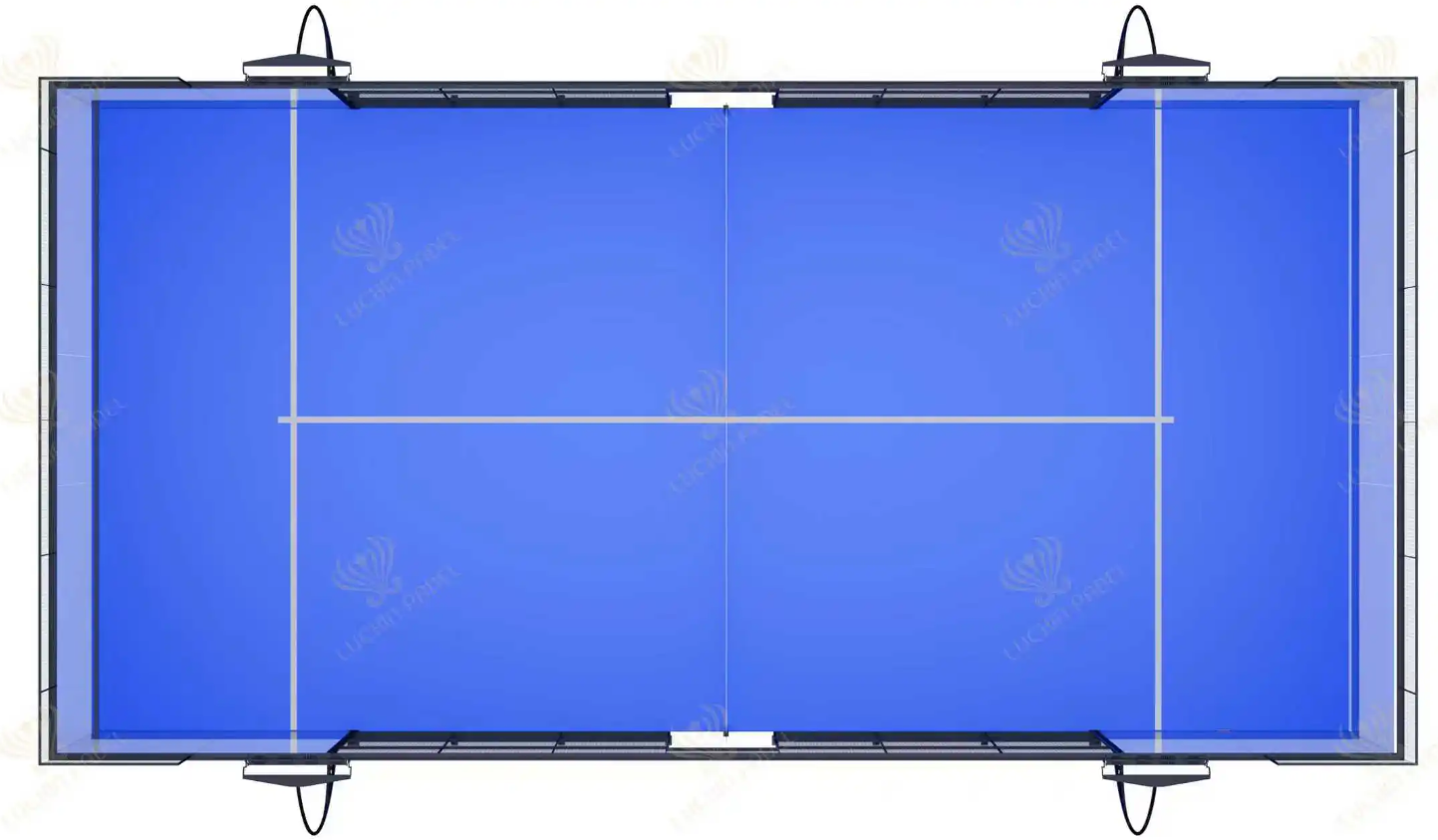
Standard Tennis Court Size and ITF Compliance for Schools
Exact Singles and Doubles Dimensions in Feet and Meters
The ITF has strict rules about court sizes for official matches. Singles courts need to be around 78 feet long by 27 feet wide. When playing doubles, players get extra space since the court widens to 36 feet, though the length stays exactly the same. The net stands at 3 feet 6 inches tall at each post but dips down to about 3 feet in the middle. Why does all this matter? Well, having standard measurements means balls bounce predictably, shots land where they should, and players can move consistently across different courts. This consistency helps athletes build real skills that work when they step onto pro tournament courts later on.
Why ITF-Compliant Tennis Court Size Ensures Fair Play and Skill Progression
Following ITF standards gets rid of those unfair advantages that come from weird court sizes. Courts that are all the same size mean players can count on how balls bounce and move around, which helps them get better at controlling spin, hitting deep shots, and figuring out where to stand during rallies. Kids who play on properly sized courts don't have to reset their whole game when they go from practice to actual tournaments. They just pick things up quicker because everything feels familiar. Studies looking at young athletes actually found something pretty interesting about this too. Players who train on courts that meet regulations adapt their footwork about 23 percent faster when competition time rolls around. And let's not forget about fair play between schools either. Courts that aren't up to standard might give home teams an accidental edge since the angles change or shots don't work quite right anymore.
Space-Smart Tennis Court Size Adaptations for School Campuses
Reduced-Court Models: 3/4-Size and Mini-Court Options for Limited Footprint
Schools with space constraints can adopt scaled-down tennis court size options without compromising developmental value. The ITF actively supports modified formats—including 3/4-size and mini-courts—through its Tennis 10s initiative. These adaptations feature:
- Reduced playing areas: Designed to fit into underutilized campus spaces like courtyards or parking lots.
- Lower nets and age-appropriate equipment: Paired with low-compression balls and junior rackets to match physical development.
- Enhanced engagement and learning: Smaller zones promote longer rallies, quicker decision-making, and earlier tactical awareness—making tennis more accessible and enjoyable for beginners.
Balancing Regulatory Flexibility with Developmental Integrity
While full ITF court size remains the competition standard, adapted courts provide essential flexibility for school facilities—provided they uphold technical integrity. The ITF's staged progression framework (Red – Orange – Green ball stages) offers a research-backed roadmap. Schools should:
- Match court size to ball stage: Use only ITF-specified dimensions for each compression level.
- Preserve core movement patterns: Ensure layouts still support practice of fundamental footwork, split steps, and stroke mechanics.
- Design for progression: Position mini or 3/4 courts near full-size facilities—or plan modular surfaces—to enable seamless transition as players advance. This ensures space efficiency never comes at the cost of long-term athletic development.
Total Facility Footprint: Runback, Clearance, and Safety Space Requirements
ITF Minimum Perimeter Space Guidelines for School Tennis Court Size Planning
Beyond the playing surface, the ITF specifies minimum clearance zones critical for safe, functional play. For standard tennis court size installations, schools must allocate:
- 21 feet (6.4 meters) behind each baseline (runback)
- 12 feet (3.66 meters) beyond each sideline
These buffers allow players to chase lobs and wide shots safely—reducing collision risk with walls, fences, or adjacent activity zones. Ignoring these requirements not only jeopardizes student safety but also compromises eligibility for sanctioned interscholastic competition and may trigger costly retrofits during facility audits.
Injury Risk Implications of Inadequate Clearance (NSCA & NCAA Data)
When there isn't enough space around the court edges, athletes face much higher chances of getting hurt. According to NCAA injury tracking reports, courts that don't have proper clearance see about 40 percent more injuries when players hit barriers compared to those meeting safety standards. The National Strength and Conditioning Association also found in their 2023 study that roughly one third of all ankle and knee injuries in school tennis happen because kids can't get back far enough when making side moves after shots. Having good buffer zones around playing areas does more than just satisfy what regulations require. These spaces actually help young athletes develop better skills since they can move through their full range of motion without restriction. Proper spacing lets them practice correct body mechanics naturally while cutting down on accidents during practices and matches throughout youth sports programs nationwide.
Surface, Durability, and Lifecycle Cost Trade-Offs for School Tennis Courts
The choice of tennis court surface makes a big difference in what schools spend initially and how much they'll be spending down the road on maintenance. Acrylic hard courts tend to strike just the right balance between price and performance. They don't cost too much to install, hardly need any upkeep at all, and last around eight to ten years even when students are using them heavily through different seasons and weather conditions. The ball bounces predictably and travels consistently across these courts, which helps players develop their skills no matter what level they're at. Clay courts might seem cheaper at first glance but come with hidden costs. Schools end up spending extra on regular watering, rolling the surface smooth, and constantly repainting lines. These expenses can push total costs up by anywhere from 40 to 60 percent over time. Grass courts? Those require constant attention with mowing, irrigation systems, and dealing with weather restrictions during certain times of year. That's why many schools today are going with UV stabilized synthetics instead. These materials hold up better against sun damage, need less frequent resurfacing, and free up money for other sports programs. When considering standard court dimensions, this approach keeps operations running smoothly while still providing good teaching value for student athletes.
FAQs
What is the standard size of a tennis court for singles matches?
The standard size of a tennis court for singles matches is 78 feet long by 27 feet wide.
What adjustments are made for a doubles tennis court?
For doubles, the width of the court increases to 36 feet while the length remains the same at 78 feet.
Why is it important for schools to have ITF-compliant tennis courts?
ITF-compliant courts ensure fair play and help students develop skills that translate directly to professional matches by providing consistent and predictable playing conditions.
Are there space-efficient court options for schools with limited campus area?
Yes, schools can opt for 3/4-size and mini-courts to fit smaller spaces, supported by ITF initiatives like Tennis 10s, which maintain developmental value.
What are the safety considerations for tennis court clearances?
Schools should provide a minimum of 21 feet behind each baseline and 12 feet beyond each sideline to ensure player safety and reduce injury risks.
Table of Contents
- Standard Tennis Court Size and ITF Compliance for Schools
- Space-Smart Tennis Court Size Adaptations for School Campuses
- Total Facility Footprint: Runback, Clearance, and Safety Space Requirements
- Surface, Durability, and Lifecycle Cost Trade-Offs for School Tennis Courts
-
FAQs
- What is the standard size of a tennis court for singles matches?
- What adjustments are made for a doubles tennis court?
- Why is it important for schools to have ITF-compliant tennis courts?
- Are there space-efficient court options for schools with limited campus area?
- What are the safety considerations for tennis court clearances?