 EN
EN

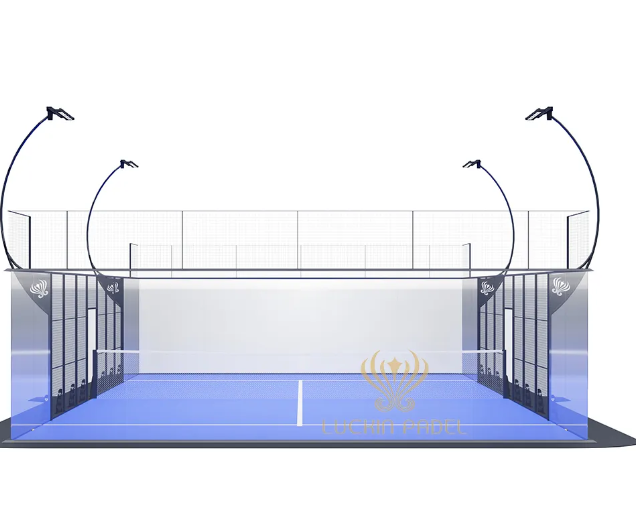
Understanding Total Padel Tennis Court Cost Drivers
Breakdown of core cost components: structure, surfacing, lighting, fencing, and permits
Building a standard padel court requires several key investments upfront. The biggest chunk of money usually goes toward structural components like galvanized steel frames and those tough tempered glass walls that keep balls from flying off the court. We're talking around 25 to 30 percent of the whole budget right there, which translates to somewhere between $15,000 and $25,000 depending on materials and quality. Next comes the artificial turf surface, costing about 10 to 15 percent or roughly $6,000 to $12,000. Energy efficient LED lights will set back another 8 to 10 percent ($5k-$8k). Fencing around the perimeter isn't too bad at 3 to 5 percent ($1.5k-$3k), but getting all the necessary permits can get tricky. Municipal fees often fall between 5 and 8 percent, though this varies wildly based on local regulations rather than any fixed amount. Preparing the site itself is actually quite expensive too. Things like grading the land, digging holes, and installing proper drainage take up 20 to 25 percent of costs because most courts need solid concrete foundations. And finally, labor costs for installation run anywhere from 12 to 18 percent ($8k-$12k), with prices fluctuating depending on where you live and how big the project is.
Regional cost variance: why North America, Europe, and Asia-Pacific differ by 25–40%
Geography shapes padel court budgets through regulatory, labor, and logistical realities—not just raw material prices.
| Region | Premium vs. Baseline | Primary Cost Drivers |
|---|---|---|
| North America | +20–30% | Stricter building codes, higher labor rates ($45–$65/hr), seismic or climate-specific engineering mandates |
| Europe | Baseline | Mature supply chains, standardized manufacturing, efficient installer networks, and harmonized permitting |
| Asia-Pacific | –15% to +25% | Import volatility, infrastructure gaps, and inconsistent permit pathways across markets |
When it comes to project costs, labor is probably the biggest wild card. Installers across Europe typically charge between 30 and 40 dollars per hour, but things get significantly pricier in big US cities where rates often hit 55 to 65 bucks an hour. Over in parts of Asia Pacific that are off the beaten path, getting materials there isn't cheap either. Shipping containers through customs and dealing with all those bureaucratic hurdles can really eat into budgets, sometimes adding anywhere from 12 to 18 percent extra just for transportation alone. On the flip side, companies following EU standards tend to save money because their production processes are more streamlined. They spend less on overhead costs and wait shorter periods for deliveries, which makes planning expenses much easier in the long run. For construction projects back home in North America that need special features like earthquake protection or foundations that won't crack under freezing temperatures, expect the final bill to be about 40 percent higher than what was originally estimated.
Indoor vs. Outdoor Padel Tennis Court: Strategic Trade-Offs
Upfront investment, climate adaptability, and year-round usability comparison
When deciding between indoor and outdoor facilities, most people overlook the long term picture and focus too much on what something costs at first glance. Building an indoor space typically sets folks back anywhere from 40 to 60 percent more money right off the bat because of all the extra work needed for roofs, support structures, proper air flow, and heating/cooling systems. Outdoor options skip these expensive additions but come with their own problems related to weather conditions. Take places with four seasons for instance rainy days, winter snowfall, or scorching summer temperatures can cut down how many days per year the facility stays open for business anywhere from around thirty days down to over a hundred and fifty days lost annually depending on location specifics matter quite a bit when making this kind of choice.
- Humid regions: Accelerated surface wear (+23% maintenance frequency)
- Cold climates: Indoor heating prevents frost heave and surface delamination
- High-sun areas: UV-stabilized turf is non-negotiable outdoors
Industry data confirms indoor facilities deliver 95% year-round usability versus 65% for outdoor equivalents—making indoor setups compelling where consistent access matters most.
Long-term operational costs: HVAC, condensation management, and surface longevity
Running indoor facilities comes with serious ongoing costs. Heating, ventilation and air conditioning systems eat up around 70% of what most places spend each year on operations. When there's not enough control over condensation inside these spaces, which happens all too often in buildings with bad airflow, it really takes a toll on artificial turf surfaces. The grass gets damaged faster and needs replacing way sooner than expected sometimes as much as four years early. That kind of premature replacement can set back facility managers between eighteen thousand to twenty eight thousand dollars depending on size and materials used. Outdoor courts avoid those HVAC headaches completely but still need their own set of investments for durability. Good drainage systems cost somewhere between five thousand and twelve thousand dollars upfront to keep puddles from forming after rainstorms. Turf treated with UV stabilizers lasts anywhere from eight to twelve years before needing replacement. And then there are the seasonal adjustments too, whether applying special reflective coatings during hot summer months or dealing with snow clearance in colder regions. These additional maintenance requirements do add some extra expenses, but they tend to be more straightforward and predictable compared to indoor alternatives. Looking at things over ten years, indoor courts generally end up costing about two and a half times more than properly maintained outdoor fields across similar conditions.
Selecting High-Performance, Cost-Effective Padel Tennis Court Surfaces and Foundations
Padel Turf Specifications: Pile Height, Density, Infill Type, and Warranty Benchmarks
How turf performs has a real impact on player safety, how balls behave during games, and ultimately the overall value over time. When it comes to pile height, most experts agree that somewhere between 8 and 12 millimeters works best. Shorter piles give better ball bounce back and make maintenance simpler, while longer piles absorb shocks better but tend to let infill migrate around more and require extra cleaning work. Looking at density is probably the most important factor for lasting quality. The number of stitches per square meter matters a lot here. High end turf typically hits over 15 thousand stitches per square meter and keeps playing well for about eight years or even longer. Silica sand in the infill makes all the difference for grip and water runoff, which becomes really important places where there's lots of humidity or frequent rain. Most serious buyers look for warranties covering at least 8 to 10 years because this shows good resistance to UV damage and stable fibers throughout their lifespan, which basically means saving money in the long run.
Foundation Options Compared: Concrete, Asphalt, and Acrylic—Durability, Drainage, and Lifecycle Value
The foundation is the court’s silent backbone—dictating ball bounce consistency, injury risk, and long-term maintenance burden.
| Material | Durability | Drainage | Lifecycle Value |
|---|---|---|---|
| Concrete | Highest resistance to cracking and deformation | Requires precise slope design (1–2%) | Highest—minimal upkeep over 20+ years |
| Asphalt | Moderate; prone to rutting and freeze-thaw degradation | Good when sealed and sloped | Moderate—requires resealing every 3–5 years |
| Acrylic | High with UV stabilizers; flexible under thermal stress | Excellent permeability—ideal for all-weather use | High—low-maintenance and rapid installation |
When it comes to dimensional stability, nothing beats good old concrete. But getting it right takes some serious expertise during grading otherwise water just pools everywhere. Asphalt might save money at first glance since it costs less initially, though those savings disappear fast when faced with harsh weather conditions that require constant sealing jobs every few years. Acrylic coatings speed things up both for drainage performance and installation time, making them popular choice for many projects. However, these surfaces will fade away pretty quickly unless protected from sunlight damage. Looking at long term costs paints an interesting picture too. Sure, concrete starts off costing around 15 to 20 percent more than asphalt does upfront. But most studies indicate this extra investment pays itself back completely after about ten years because there are simply fewer repairs needed and no need for replacing surfaces as often down the road.
Site Readiness and Compliance: Hidden Budget Impacts for Your Padel Tennis Court
When unexpected site problems pop up during construction, they tend to be the biggest headache for budgets, usually adding somewhere between 20% to 35% extra costs if ignored from the start. Problems like unstable soil, steep slopes steeper than 1:100 ratio, bad drainage systems, or contaminated fill material often lead to major groundworks needing attention. Think about things like soil nailing techniques, digging those underground drainage channels, or building special retaining walls. Then there's always the local regulations issue which throws another monkey wrench into planning. Zoning permits, environmental assessments looking at wetlands or protected trees, noise restrictions around neighborhoods, and lighting rules after certain hours all differ from place to place. Getting these permits delayed can literally stop work on a project for weeks straight. And what happens when someone finds buried pipes, forgotten property rights agreements, or groundwater problems halfway through construction? That typically means going back to the drawing board or spending serious money on fixes. Getting a proper geotechnical survey done early on isn't just good practice it's absolutely necessary. Looking at potential sites with gentle slopes, ready access to utilities already in place, and not too much greenery or environmental hurdles makes sense if anyone wants to keep their budget intact and avoid schedule nightmares down the road.
FAQs
What are the main cost components for building a padel tennis court?
The main cost components include structural elements like steel frames and tempered glass walls, artificial turf, lighting, fencing, permits, site preparation, and labor costs.
How do regional variances affect the cost of constructing a padel court?
Regional variances in construction costs are influenced by local regulations, labor rates, and logistical challenges. North America typically experiences higher costs due to stricter building codes and labor rates, while Europe may benefit from standardization and mature supply chains, affecting cost differentials by 25-40%.
What are the benefits of choosing an indoor vs outdoor padel court?
Indoor padel courts offer increased usability throughout the year, while outdoor courts have lower initial costs but are subject to weather conditions. Indoor courts come with higher operational costs due to HVAC systems, but they provide a more consistent playing environment.
What are the long-term costs associated with indoor vs outdoor padel courts?
Indoor courts often have higher long-term operational costs due to heating, ventilation, and air conditioning systems. Outdoor courts require investments in drainage and maintenance but tend to incur more predictable and lower expenses over time compared to indoor facilities.
What are the considerations for selecting the court surface and foundation materials?
Choosing the right court surface and foundation involves considering player safety, ball behavior, durability, and long-term maintenance. The choice between concrete, asphalt, and acrylic foundations affects performance, drainage, and lifecycle costs, while turf specifications impact longevity and playability.
Table of Contents
- Understanding Total Padel Tennis Court Cost Drivers
- Indoor vs. Outdoor Padel Tennis Court: Strategic Trade-Offs
- Selecting High-Performance, Cost-Effective Padel Tennis Court Surfaces and Foundations
- Site Readiness and Compliance: Hidden Budget Impacts for Your Padel Tennis Court
-
FAQs
- What are the main cost components for building a padel tennis court?
- How do regional variances affect the cost of constructing a padel court?
- What are the benefits of choosing an indoor vs outdoor padel court?
- What are the long-term costs associated with indoor vs outdoor padel courts?
- What are the considerations for selecting the court surface and foundation materials?