 EN
EN

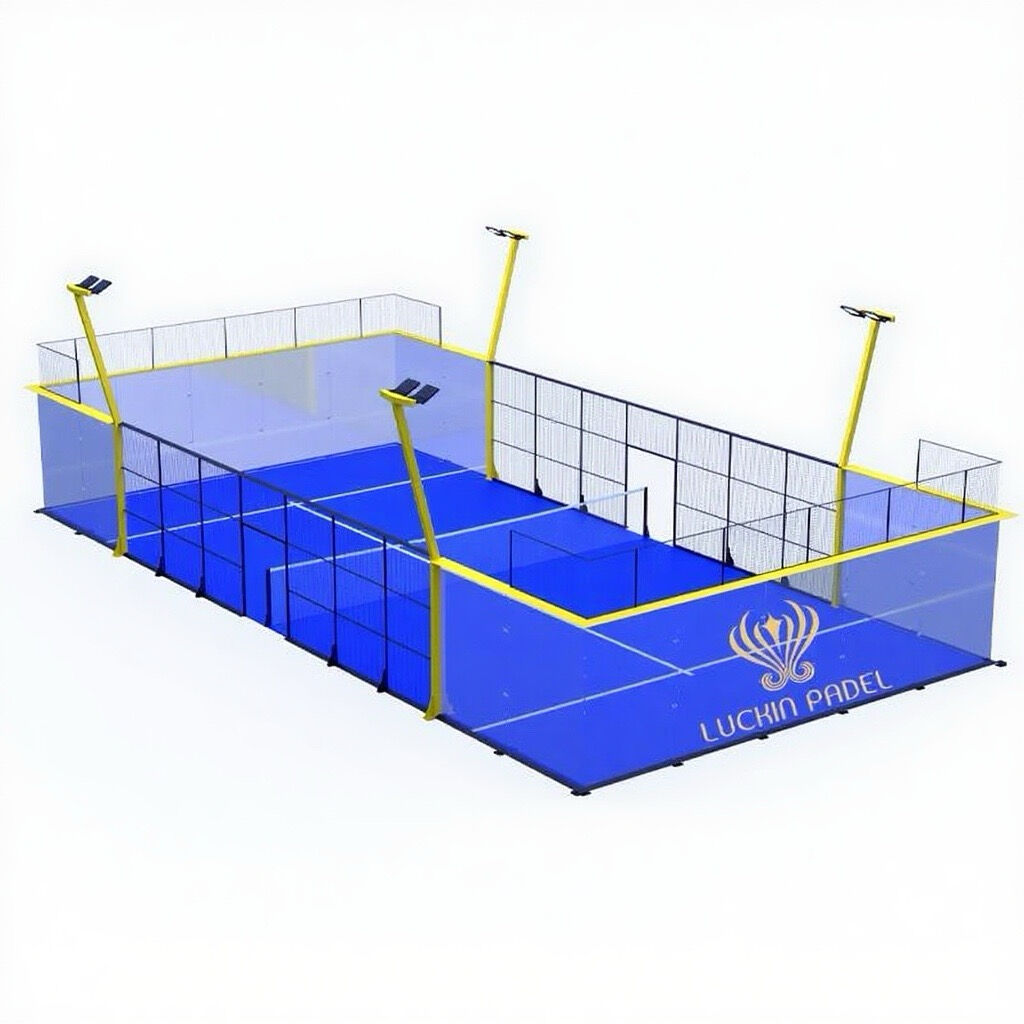
Space & Infrastructure Requirements for Venue Integration
Court footprint, ceiling height, and wall specifications: padel vs pickleball
For padel players, they need a pretty specific setup: courts should measure around 20 meters by 10 meters, with those fancy glass walls standing at least 3 to 4 meters tall. And don't forget about headroom either – outdoor courts need at least 6 meters clearance, but when building indoors, most facilities go for 8 meters or more so players can hit those high shots without worries. Pickleball is much simpler though. Courts are smaller at just 13.4 meters long and 6.1 meters wide, and they work great outdoors or even in basic shelters. No special walls required whatsoever. When it comes to what's underfoot, padel courts require expensive safety glass that costs anywhere from $15,000 to $25,000 per court plus shock absorbing surfaces like artificial turf layered over concrete. Meanwhile pickleball handles just fine on regular acrylic or asphalt surfaces, which makes setting up new courts significantly cheaper and easier to maintain over time.
Conversion feasibility: retrofitting tennis, basketball, or squash courts
When it comes to making changes, tennis courts are probably the best bet for retrofits. A single court surface can actually fit two pickleball courts with just minor tweaks, or get turned into a padel court by putting up some perimeter walls and giving it a new coat of paint. Basketball and squash facilities also work well for padel conversions since they already have walls in place. Still, replacing the floors is going to cost about $12,000 per court according to recent reports from sports facility experts. Switching squash courts to pickleball basically means painting lines on the floor. But padel conversions tell a different story entirely. These need proper checks of wall stability before installation, complete surface replacement, plus special drainage systems that most places don't have. Looking at industry numbers, around three out of four multi-sport centers choose pickleball over other options when converting basketball courts. They seem to really appreciate how fast these projects come together compared to the headaches of major construction work.
Operational Flexibility and Multi-Sport Adaptability
Maximizing venue revenue hinges on adaptable infrastructure that responds to shifting demand. Hybrid court systems enable seamless transitions between padel and pickleball—optimizing space, reducing downtime, and supporting diverse programming.
Hybrid court systems: shared surfaces, modular nets, and retractable walls
Dual-line-marked acrylic surfaces support both sports without structural modification. Key components include:
- Modular nets, adjustable between padel’s 88cm and pickleball’s 91.44cm height in under 15 minutes
- Retractable glass walls, allowing padel enclosures to open into pickleball-ready spaces during off-peak hours
- Shared surfaces with temporary line tape cut recoating costs by 40% versus permanent dual-line installations
These solutions let venues repurpose existing tennis or squash courts efficiently—expanding programming options while minimizing idle time and capital outlay.
Scheduling efficiency and revenue diversification across peak/off-peak hours
Demand-driven scheduling increases facility utilization by up to 35%. By aligning sport offerings with demographic usage patterns, venues optimize occupancy and pricing:
| Strategy | Padel Application | Pickleball Application |
|---|---|---|
| Peak hours | Youth leagues/events | Senior social tournaments |
| Shoulder periods | Family taster sessions | Corporate wellness programs |
| Off-peak | Skill clinics | Beginner workshops |
Booking systems that automatically set prices according to current demand work pretty well these days. Courts tend to cost more in the mornings when seniors dominate pickleball play, but drop off in price at night when padel attracts younger crowds. The difference in pricing actually boosts income from each court by around 20 to maybe even 30 percent. When bad weather hits, facilities smartly push sports that can be played indoors instead of letting empty courts sit idle. Padel handles rain just fine, and pickleball works okay too as long as there's some sort of roof overhead. This helps smooth out those pesky seasonal dips in business.
Demographic Fit and Community Engagement Potential
Age, skill accessibility, and social dynamics: why pickleball excels with seniors and padel attracts youth/families
Pickleball’s low-impact movement, underhand serve, and compact court make it uniquely accessible for seniors—reducing mobility demands while fostering intergenerational play. Its conversational pace and social structure support wellness-oriented programming, with dedicated leagues reporting 65%+ senior participation (Recreation Management, 2024).
The fast-paced nature of padel makes it really appealing to kids and families. With quick back-and-forth exchanges, smart shot placements, and the natural teamwork aspect of doubles play, it just clicks with younger players. Plus, people pick up padel much faster than they do tennis or squash, which means fewer frustrations when starting out. The court design is also great for spectators, so clubs often host community gatherings and school tournaments. Many recreational centers actually see about 40 percent more family sign-ups for padel courts compared to regular tennis courts. This difference in who plays what allows facilities to plan better programs across different age groups. Seniors enjoy pickleball in the mornings while kids get their after school workouts in on padel courts. This kind of scheduling helps keep facilities busy throughout the day and builds lasting connections within communities.
Regional Demand Signals and Strategic Venue Alignment
Regional demand patterns directly influence ROI. Urban centers with denser, younger populations show 47% higher padel adoption—driven by its social, fast-paced appeal and alignment with lifestyle-oriented fitness trends. Suburban and retirement communities account for 68% of pickleball’s growth, fueled by accessibility, low injury risk, and strong senior uptake.
Investors looking at new facilities need to check out local sports participation numbers first. Check those city sports reports and run some community surveys to get a real sense of interest levels. Also important is seeing how well the proposed venue fits with what's already there locally, like nearby tennis courts or squash clubs. When there's good alignment with existing racket sports communities, people tend to join up faster. For companies running multiple locations, starting small makes sense too. Roll out new courts in specific neighborhoods where demand maps show promise. Some areas are still figuring things out, so putting down dual-purpose courts works great for testing both pickleball and padel at once without committing fully to either. The real gold rush happens in places where racket sports aren't really established yet. But before breaking ground anywhere, make sure all the paperwork checks out. Outdoor pickleball courts need special plans for noise control around residential areas. Indoor padel facilities require certain minimum ceiling heights and building structures that can handle the equipment weight safely.
FAQ Section
What are the space requirements for padel and pickleball courts?
Padel courts should be around 20 by 10 meters, with glass walls standing at least 3 to 4 meters tall, and a ceiling clearance of at least 6 meters for outdoor courts. Indoor courts often extend to 8 meters in height. Pickleball courts are 13.4 meters long and 6.1 meters wide.
Can existing tennis courts be converted to padel or pickleball courts?
Yes, tennis courts can be retrofitted to create two pickleball courts with minor adjustments or transform into padel courts by installing perimeter walls and repainting.
How do hybrid court systems work?
Hybrid court systems use shared surfaces, modular nets, and retractable walls to support both padel and pickleball without major structural changes, optimizing space and reducing downtime.
Why is pickleball popular with seniors?
Pickleball's low-impact movement, underhand serves, and compact courts make it easily accessible to seniors, fostering social interaction and promoting physical wellness.
What is the potential market for padel and pickleball?
Urban areas with younger populations show higher padel adoption, while suburban and retirement communities drive pickleball's growth due to accessibility and low injury risk.