 EN
EN

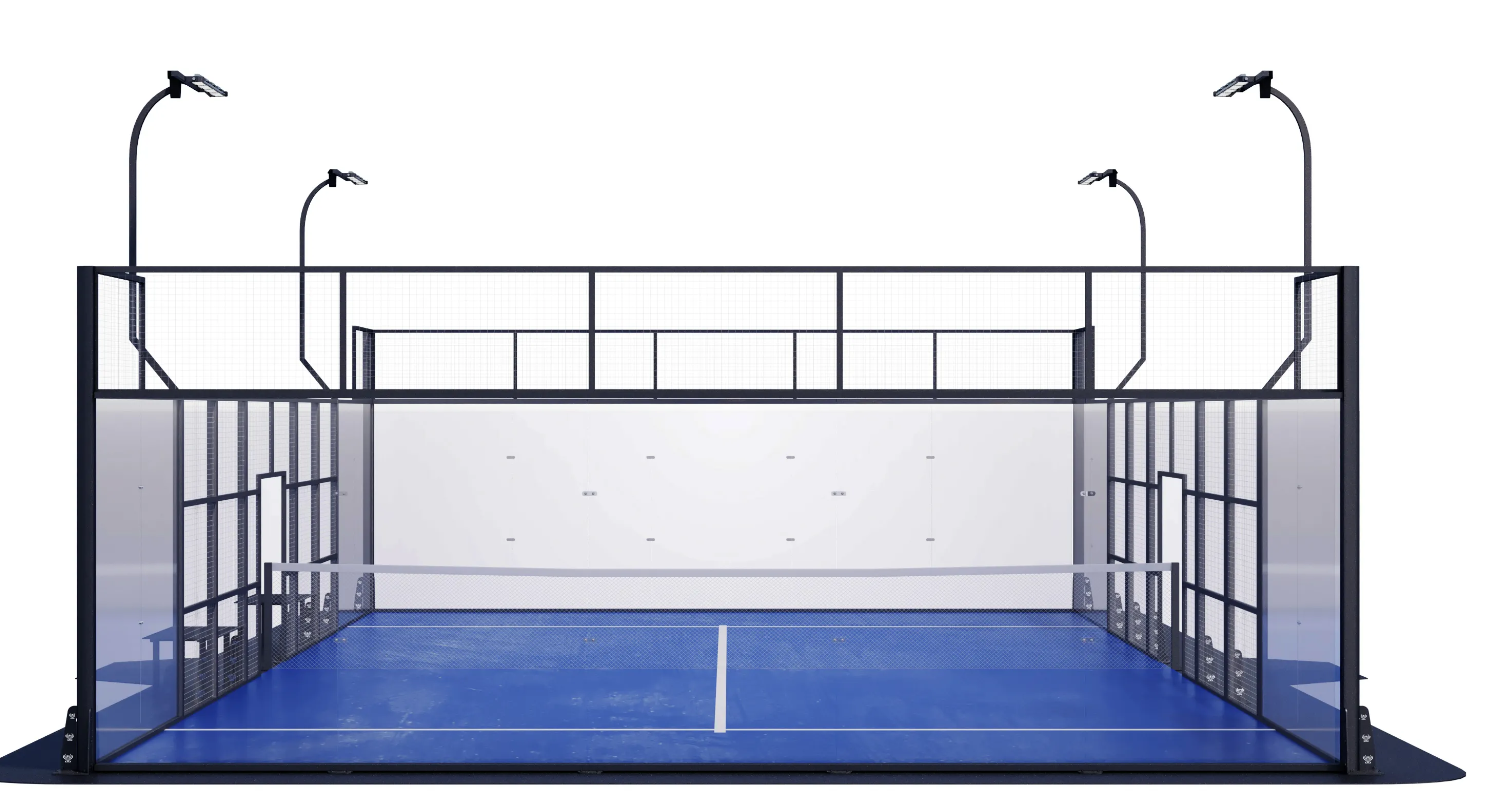
Verify Compliance with International Padel Federation (FIP) Standards
Understanding FIP Guidelines for Official Padel Court Dimensions and Layout
The International Padel Federation (FIP) has laid down pretty strict rules for courts used in competitions. Courts need to be rectangles measuring exactly 20 meters long and 10 meters wide, give or take half a percent either way. These size requirements became standard worldwide back in 2023, and they help make sure balls bounce predictably no matter where players are competing officially. There are other details too: walls should be at least 3 meters high, the net sits at 0.88 meters in the middle but gets slightly taller near the posts reaching 0.92 meters there. The service line needs to be placed precisely 6.95 meters away from the net. Getting all these numbers right matters a lot actually. Manufacturers who build these courts have to stick closely to these specs if they want their products to work properly during serious tournaments and keep the game fair for everyone involved.
The Role of FIP Recognition in Ensuring Tournament-Ready Court Quality
The FIP certification stands out as the go-to benchmark worldwide when it comes to assessing padel court quality. When a facility gets this stamp of approval, it means they've met all those important requirements about structure, dimensions, and how well the court performs during actual matches. Courts that pass these tests offer players reliable ball bounces off the glass walls, surfaces that behave predictably underfoot, and enough room around the court so nobody feels cramped while moving. Tournament organizers really care about this consistency because if a court doesn't meet standards, not only can results get thrown out, but the entire event might lose its official accreditation too. For facilities lucky enough to earn FIP approval, there's an added bonus: top players tend to gravitate toward them, and event planners take notice, which naturally boosts their reputation as serious places to compete at high levels.
How to Verify a Padel Court Factory's FIP Compliance Documentation
When checking if a factory meets FIP requirements, ask for their complete certification files. These should include reports on dimensions, records showing where materials came from, and proof of third party checks. Top manufacturers often have online systems where customers can compare product specifications with what's currently accepted under FIP guidelines. It makes sense to work with suppliers who get audited regularly and can show fresh certifications dated no older than one year back. Good factories are open about their quality control methods too. They'll explain clearly how they keep parts within the tight ±0.5% size variation needed throughout manufacturing, which is critical for ensuring products fit properly when assembled later on.
Growing Market Demand for FIP-Certified Courts in Commercial and Private Facilities
The need for FIP certified courts jumped around two thirds since 2022 as businesses and developers look for premium quality facilities that can handle tournaments. Getting certified now matters a lot for sports centers wanting to bring in big events and draw in serious athletes who care about their game. We see private clubs and upscale housing developments specifically asking for these FIP compliant courts because they know it adds value over time and makes reselling easier down the road. What's happening here shows how tennis is becoming more professional by the day. People are finally realizing that following those international standards doesn't just look good on paper it actually makes a real difference in how players feel when they play, keeps them safer during matches, and means the whole court lasts longer without needing constant repairs.
Assess Key Safety and Structural Certifications for Padel Court Components
CE marking and EN 1090 certification for structural steel frames
When it comes to building padel courts, the CE marking and EN 1090 certification really matter for structural integrity. The CE mark basically means the product follows all those EU rules about health, safety stuff, and environment protection. Then there's EN 1090 which goes deeper into whether a factory actually knows how to make steel structures that hold up under pressure both literally and figuratively speaking. These two together mean the steel frames won't buckle when players hit balls hard or during sudden downpours in summer matches. Most manufacturers we talk to say getting these certifications isn't just paperwork but something that genuinely makes their products last longer without compromising on quality.
UNI EN ISO 3834 certification for high-standard welding processes
The UNI EN ISO 3834 certification basically means a factory keeps tight control on how it handles welding work. According to this global standard, shops need trained staff working with properly calibrated tools, plus written down procedures for each welding job to make sure joints hold together reliably. Factories that get certified run tests on their welds regularly. They check if the welds are strong enough because weak spots can develop later on and might actually put people at risk or weaken structures when things get stressed under normal conditions.
TÜV SÜD certification for safety and long-term structural integrity
TÜV SÜD certification provides pretty much the gold standard when it comes to verifying both safety and how long padel courts will last. Testing isn't just theoretical either. They actually simulate real world conditions including wind speeds reaching around 120 km/h, check how well surfaces hold up against impacts, and run tests that mimic what happens over many years of use. Courts that get certified go through lab tests that amount to something like two full years worth of wear and tear all crammed into weeks. The process looks at things like galvanized steel that won't rust easily and makes sure manufacturers pick quality materials from start to finish. This attention to detail helps maintain the court's strength and stability for years after installation.
UNI 7697 compliance for impact-resistant glass wall safety
The UNI 7697 standard stands as the primary guideline for impact resistant safety glass used specifically in padel court construction. According to this regulation, manufacturers must use either tempered or laminated glass panels at least 12mm thick. What makes this important? Well, these specifications help ensure that when balls hit the glass at speed or players accidentally collide with it during intense matches, the glass won't break into dangerous fragments. Instead of creating those sharp, hazardous shards we often associate with broken glass, compliant materials tend to break into smaller, relatively harmless pieces. For anyone running a padel facility, following UNI 7697 isn't just about meeting regulations but actually making sense from a practical standpoint too. After all, nobody wants to deal with injured players because of faulty glass installation.
Evaluate Material Quality and Long-Term Durability
How long a padel court lasts really comes down to what goes into building it, especially when looking at those core components like the glass walls and steel framework. The safety glass needs to pass certain tests for impact resistance, otherwise it just won't hold up under regular play. For the steel parts, most experts recommend going with hot dip galvanized steel that has at least 550 grams per square meter of zinc coating. This helps prevent rust even after years of being exposed to rain, sun, and all sorts of weather extremes. Courts built this way tend to stay solid despite constant use from players hitting balls against them day after day. Good construction means fewer repairs and replacements down the road, which makes sense both practically and economically for facility owners.
Artificial grass quality and installation standards for consistent ball bounce
The quality of synthetic turf makes all the difference when it comes to how balls bounce and how comfortable players feel during matches. Top notch padel courts typically feature either nylon or polypropylene fibers, stitched together at around 18k to 21k stitches per square meter. The grass blades themselves stand about 10 to 12 millimeters tall, which helps with both aesthetics and functionality. When installing these surfaces, professionals always start with a good shock absorbing base layer underneath. They also take extra care with the seams, using precise welding techniques so everything stays intact over time. This attention to detail means the court will last longer and handle regular play without showing signs of wear too quickly.
Material testing protocols used in certified padel court factories
Manufacturers who know what they're doing put their materials through all sorts of tough tests before releasing anything to market. We're talking about things like speeding up the aging process, simulating mechanical stresses, and exposing samples to harsh environments just to see how they hold up. The actual testing looks at stuff like tensile strength which usually needs to be over 500 N per square millimeter for parts that bear weight, plus how well the material resists impacts and fights off corrosion from moisture and chemicals. When products pass these tests with flying colors after being checked by independent labs according to global standards, it gives customers peace of mind knowing their investment won't fall apart after a few months of regular use.
Ensure Third-Party Validation and Ongoing Quality Audits
Role of Independent Certification Bodies in Verifying Padel Court Safety
Certification organizations act as important gatekeepers for padel court manufacturers wanting to prove their products meet global safety requirements. These groups conduct on-site inspections and run various tests to check if courts have solid construction, safe glass installations, and consistent playing surfaces. What matters most is that customers get real proof instead of just marketing promises from factory owners. Looking at recent industry numbers from 2024, sports centers that went through this independent checking process saw around 40 percent reduction in problems related to safety during those critical first five years after installation.
Compliance with UNE 147201:2024 Through Periodic Factory and Product Audits
Under the new UNE 147201:2024 regulations, manufacturers face regular checks on their entire production chain from raw materials to end products. Factories that earn certification need to stick to strict guidelines covering everything from material composition to weld integrity and how structures hold up under stress during actual manufacturing runs. The point of these routine inspections is simple but important they keep quality assurance mechanisms working properly all the way from when a factory first gets approved until goods actually reach customers hands. Without this kind of oversight, small issues might creep into production that later affect product safety or just plain don't perform as expected in real world conditions.
Final Inspection Processes and Performance Validation Before Delivery
Padel courts get thoroughly checked out before they leave the factory, with tests that mimic actual playing conditions. We check how consistent the ball bounces across different surfaces, test if the structure can handle regular play without issues, and make sure those safety barriers around the court hold up when hit hard. The whole point is to confirm these courts will perform at tournament quality standards and last through years of intense use. Clients receive detailed reports showing everything passes our strict requirements well before any installation takes place on site.
FAQ Section
What are the standard dimensions for a padel court according to FIP?
The official padel court dimensions are 20 meters long by 10 meters wide, allowing a variation of plus or minus 0.5%.
Why is FIP certification crucial for padel courts?
FIP certification ensures that padel courts meet global standards for quality, safety, and performance, thus providing a consistent playing experience and attracting top players and tournaments.
What does CE marking signify for a padel court?
CE marking indicates compliance with EU regulations on health, safety, and environmental protection, specifically focusing on the structural integrity of the court.
How do manufacturers ensure long-term durability of padel courts?
By using hot dip galvanized steel with a substantial zinc coating and impact-resistant safety glass, manufacturers ensure padel courts can withstand various weather conditions and rigorous play over time.