 EN
EN
The Foundation of a Professional Padel Experience
The rapid global surge in padel popularity has turned court construction into a highly specialized field. Building a court that stands the test of time, weather, and intense, daily play is not just about assembling glass and metal; it is about engineering a precision environment where every millimeter counts. For builders and club owners, the difference between a high-performing, revenue-generating court and a recurring maintenance nightmare lies in the strict technical specifications. Understanding the intricate balance between structural integrity, material quality, and playing dynamics is essential for long-term success. Every component, from the base foundation to the final lighting adjustment, dictates how the ball bounces and how the players interact with the space. Achieving excellence in this domain requires a steadfast commitment to engineering standards that prioritize player safety, long-term durability, and aesthetic professional appeal above all else.
Engineering the Base and Structural Integrity
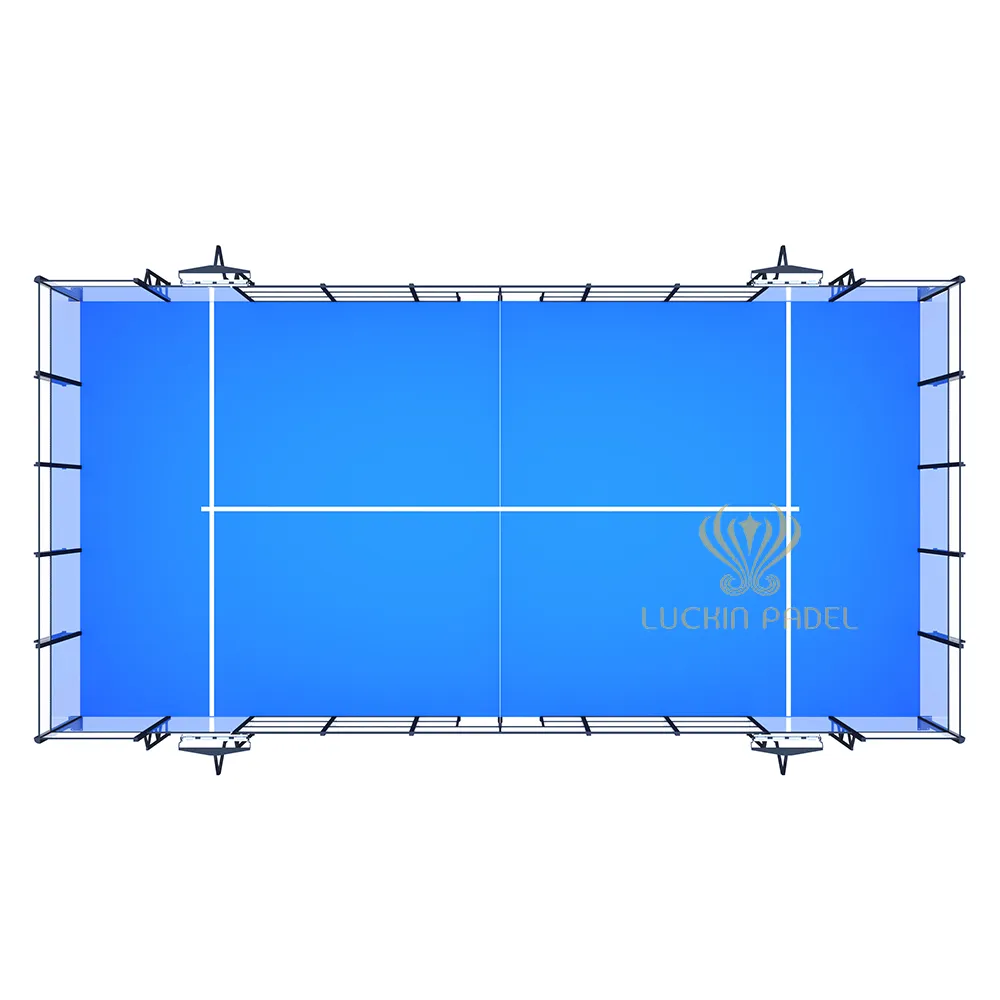
Every successful, long-lasting padel court begins with a solid, perfectly level foundation. If the base is compromised, even the highest-quality glass and premium turf will eventually fail due to settling, cracking, or drainage issues. A professional-grade foundation usually requires a reinforced, steel-mesh concrete slab, precisely leveled to ensure consistent, predictable ball bounce across the entire 10m x 20m play area.
Drainage is equally critical; builders must ensure a slight, calculated slope or an advanced drainage system to prevent water pooling, which can quickly damage the synthetic turf and accelerate corrosion on the structural metal frames. Structural integrity also extends to the uprights and crossbars that support the walls. High-quality carbon steel, typically treated with robust hot-dip galvanization and a high-end powder-coated finish, is mandatory to resist the inevitable wear and rust that comes with both intensive indoor usage and harsh outdoor, weather-exposed environments.
Selecting Premium Glass and Fencing Materials
The walls of a padel court are central to the game's unique rhythm and flow. Tempered glass is the industry standard for a reason—it offers the necessary safety profile while maintaining the transparency and extreme hardness required for consistent ball rebounds. Builders must ensure that glass panels are properly tempered according to international safety standards, usually 10mm or 12mm thick, depending on the site's exposure to wind loads and structural requirements.
The hardware used to mount this glass is just as vital as the glass itself. Using high-quality, corrosion-resistant bolts and specially designed, shock-absorbing gaskets prevents the micro-vibrations that frequently lead to glass cracks over time. When it comes to fencing, electro-welded mesh panels are preferred for their superior durability, consistent tension, and lack of sharp edges. This ensures that the ball does not take unpredictable bounces and that players remain safe during high-speed, intense exchanges against the perimeter.
Artificial Turf Specifications for Optimal Play
The surface of a padel court is not merely a floor; it is a critical technical component of the game itself. Synthetic turf for padel must provide specific friction and rotation characteristics to allow players to move safely, perform rapid pivots, and execute slides without placing excessive, unnecessary strain on their ankles and knees. The industry has moved decisively toward curly monofilament or high-quality fibrillated fibers, which are specifically designed to hold silica sand in place uniformly.
This sand infill is not a minor detail—it is the secret to consistent ball behavior and long-term turf longevity. Builders must pay close attention to the pile height, stitch rate, and overall density of the turf to ensure that the sand remains stable, preventing "bald spots" or fiber matting that can create dead zones in the court and ruin the professional feel of the entire facility.
Lighting and Environmental Design
Lighting is often an overlooked specification that can make or break the viability of a sports facility. For professional-level play, illumination must be even, bright, and completely glare-free, typically achieved through a strategic array of high-efficiency LED floodlights mounted at specific, calculated heights. Standard requirements suggest a minimum of 400 to 500 lux for amateur play, and upwards of 700 lux for professional, high-speed tournaments.
Furthermore, the lighting design must meticulously account for the total height of the court and the precise positioning of the poles to ensure that the light does not blind the players when they look up to hit powerful overhead shots. Proper lighting, combined with well-planned court spacing and acoustic management, turns a basic area into a high-value sports venue that players will choose over and over again compared to inferior, poorly lit alternatives.
Partnering for Manufacturing Excellence
The complexity of modern padel court construction demands a supply chain that provides zero-defect components. Precision in manufacturing determines whether panels align perfectly, whether the glass sits flush against the frame, and whether the turf behaves exactly as expected during professional play. Luckinpadel specializes in providing the comprehensive manufacturing support required to meet these rigorous, high-stakes international standards.
By integrating high-quality raw materials, advanced powder coating processes, and strict quality control protocols for every metal piece, bracket, and structural element, Luckinpadel ensures that builders can execute their installation projects with absolute confidence. Leveraging a manufacturing partner that prioritizes technical consistency and supply chain transparency allows court developers to focus on the installation process, knowing that every component—from the foundational steel to the finishing hardware—is built to last and designed for peak, long-term professional performance.