 EN
EN

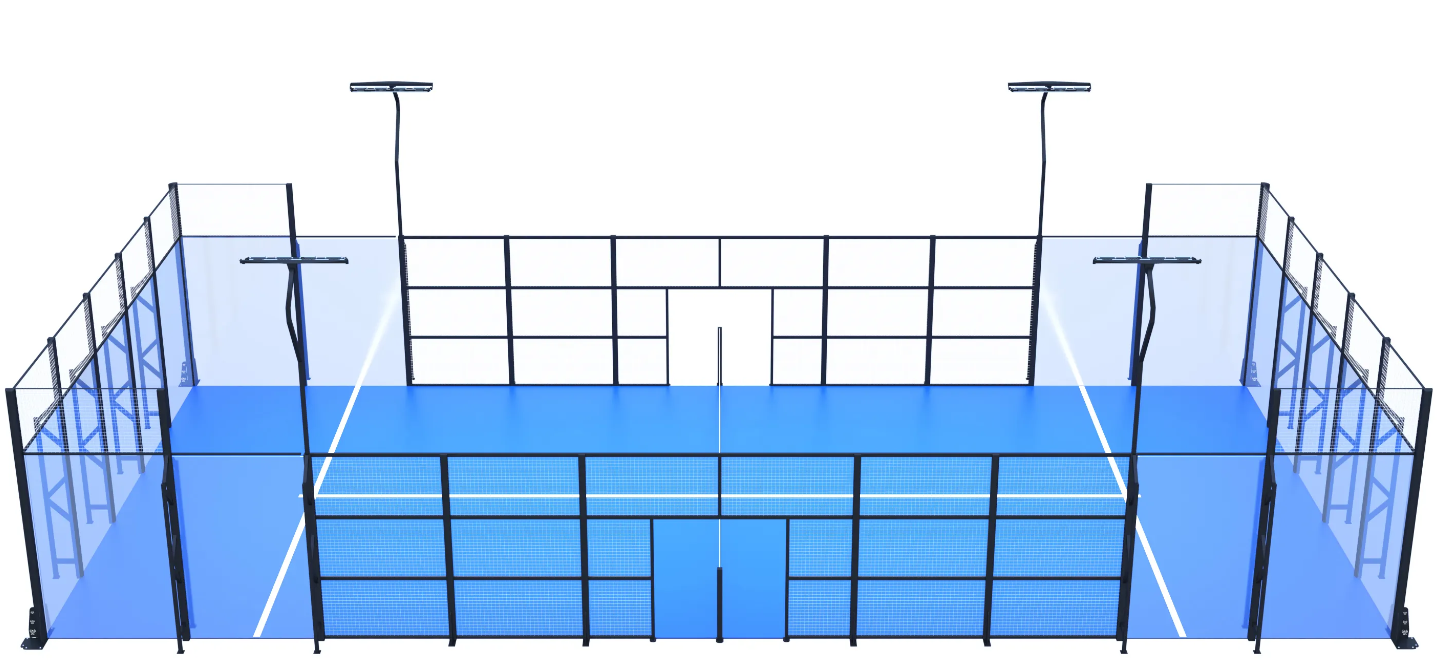
Breaking Down the Cost of Building a Padel Court
Initial Investment and Construction Expenses Breakdown
Constructing a padel court requires an initial investment of $24,000–$70,000 for outdoor installations, with premium configurations exceeding $90,000 (Sports Facility Reports 2024). Key expenses include:
- Site preparation (15–25% of total cost)
- Structural framing and glass walls (30–40%)
- Synthetic turf and professional installation (20–25%)
Indoor facilities incur 20–40% higher costs due to climate control needs and specialized ventilation systems.
Core Components Affecting Padel Court Costs: Frame, Glass, Turf, Foundation
Material quality directly impacts durability and gameplay performance. Here's a cost comparison for critical components:
| Component | Standard Build ($) | Premium Build ($) |
|---|---|---|
| Galvanized Frame | 8,500–12,000 | 15,000–18,000 |
| Tempered Glass | 6,000–9,000 | 11,000–14,500 |
| Fibrillated Turf | 4,800–7,200 | 8,500–12,000 |
| Concrete Foundation | 10,000–15,000 | 18,000–22,000 |
Opting for tournament-grade materials increases initial outlay but reduces long-term maintenance by 35–50% through extended component lifespans.
Construction Cost of a Padel Court in Southeast Asia Including Land Preparation and Permits
In urban Southeast Asia, land acquisition and permitting add $7,000–$18,000 to budgets. Bangkok operators report 6–8-week delays in license approvals, emphasizing the need for contingency planning. Regional cost drivers include:
- Monsoon-resistant drainage systems (+12–18% vs. standard designs)
- Hurricane-grade glass walls for coastal areas (+25–30%)
- Local labor rates averaging $18–25/hour for skilled technicians
Proper site evaluation prevents $5,000–$12,000 in unplanned earthwork expenses, particularly in areas with unstable soil conditions.
Evaluating ROI: Revenue Potential and Financial Viability
Return on investment (ROI) and payback period for padel court facilities
Padel court operators typically achieve ROI rates of 18–36%, with payback periods spanning 18–42 months (Global Racket Sports Report 2023). While the basic ROI formula remains foundational, modern operators increasingly factor in:
| Metric | Impact Range |
|---|---|
| Off-peak utilization | 25–40% of total hours |
| Membership retention | 60–75% annual rate |
| Maintenance costs | 8–12% of gross revenue |
A Bangkok facility reduced its payback timeline to 16 months through hybrid pricing models, demonstrating how strategic operations amplify returns beyond construction quality.
Revenue potential per hour and weekly booking utilization for padel courts
Southeast Asian facilities report hourly rates of $20–$40, with premium urban courts achieving 85% peak-hour occupancy. Key utilization patterns emerge:
- Prime time (6–9 PM): 95–100% booking rates
- Weekend mornings: 70–85% occupancy for family play
- Corporate slots: 15–20% of weekly bookings
Operators averaging 65% weekly utilization recover construction costs 23% faster than those at 50% occupancy (2023 Sports Facility Benchmarks).
Factors influencing financial performance: location, management, pricing strategies
Three levers dominate padel court profitability:
-
Location density
Urban courts within 1km of business districts see 40% higher membership renewals than suburban counterparts -
Dynamic pricing
Facilities using AI-driven rate adjustments report 18% higher revenue per available court hour -
Staff efficiency
Venues with automated booking systems operate with 30% fewer staff while maintaining 4.8/5 customer satisfaction ratings
Padel court as an investment opportunity: market demand vs. capital outlay
Looking at the numbers for the ASEAN padel market, we see it growing at around 22% per year from 2022 to 2025. That kind of growth makes sense why people would invest despite the initial costs, especially if they maintain good operations. Building a standard double court typically costs between $45k and $68k right off the bat. But here's something interesting from industry data: courts that start making money back within two years end up with about 19% better returns over their lifetime compared to those that take longer to break even. And this matches what we're seeing on the ground too. Most newcomers to padel in the region become regular weekly players within just six months after trying it out for the first time.
Long-Term Costs: Maintenance, Durability, and Operational Sustainability
Annual Maintenance Costs and Frequency of Surface or Equipment Replacement
Maintaining high quality padel courts costs around 5 to 8 percent of what they originally cost to build each year. Most owners spend anywhere from $3k to $8k annually on things like fixing surfaces, replacing nets, and updating lights. The synthetic turf tends to last about three to five years before it needs replacing according to the Sports Surface Maintenance Report published in 2023. Glass walls are another concern as they usually need resealing somewhere between eighteen and twenty four months after installation to keep them structurally sound. Courts that get used inconsistently or at odd times can wear down much faster sometimes even accelerating deterioration by as much as forty percent which is why regular checkups really matter for keeping these facilities in good shape over time.
Ongoing Operational Expenses Such as Staffing, Utilities, Insurance, and Marketing
Operational costs consume 25–35% of gross revenue for padel facilities. Key expenses include:
- Staffing: $1,200–$2,500/month for court supervisors and maintenance crews
- Utilities: $800–$1,400/month for LED lighting and climate control
- Insurance: $150–$300/month per court for liability coverage
- Marketing: 8–12% of revenue allocation for membership drives and event promotions
Court Lifespan and Timing for Major Structural Renovations
Properly maintained concrete foundations last 20–25 years before requiring full resurfacing, though drainage systems often need upgrades every 10–15 years. Steel frameworks corrode 30% faster in coastal climates, potentially shortening renovation cycles by 3–5 years compared to inland installations.
Hidden Long-Term Costs vs. Projected ROI: A Reality Check
| Cost Factor | ROI Impact |
|---|---|
| Permit renewals | $500–$2,000 biannually per jurisdiction |
| Market saturation effects | 10–25% booking rate decline after 5–7 years |
| Tech upgrades | $4,000–$7,000 every 3 years for booking systems |
Facilities using adaptive pricing models and modular construction designs reduce long-term cost variance by 18–22% compared to fixed-rate operations (Global Court Economics Study 2023).
Construction Quality and Its Impact on Player Experience and Retention
How Materials Influence Long-Term Performance and Maintenance Needs
Investing in premium materials pays off in the long run when it comes to ongoing costs. Take tempered safety glass for instance. These walls are typically around 8 to 10mm thick and can handle about three times the impact compared to regular glass. According to research from Sports Surfaces Journal last year, this means facilities spend roughly 42% less on replacements after ten years. The same goes for synthetic turf treated with UV stabilizers. Good quality turf stays playable for about six to eight years, which is basically twice as long as cheaper alternatives. And let's not forget about those steel frames that resist warping even in hot, humid environments where other installations might buckle under pressure.
Value Comparison Between Standard and Premium Construction Choices
- Standard Build: $28,000 upfront | 15% annual maintenance growth | 5-year major renovation cycle
-
Premium Build: $38,000 upfront | 7% annual maintenance | 8-year renovation cycle
Premium acrylic surfacing reduces ball bounce variance to less than 2%, creating tournament-grade consistency that justifies the 36% higher initial investment.
Linking Construction Quality to Player Experience and Customer Retention
Courts using FIP-certified materials report 31% higher customer retention (Global Padel Survey 2023), thanks to consistent ball response and injury-resistant surfaces. Facilities with anti-glare glass walls and professional lighting retain 82% of first-time players versus 54% at basic venues, proving that construction quality directly supports revenue sustainability.
Case Study: High-Performance Padel Court with Optimized ROI in Bangkok
Rapid Growth of Padel in Urban Southeast Asia: Market Context
The game of padel has taken off big time across Southeast Asia, growing by almost 190 percent since the start of 2020. Bangkok stands out as a real hot spot for this sport thanks to both the increasing number of expats living there and Thai middle class folks getting into urban sports. Looking at Thailand specifically, there are currently around 11 working courts scattered throughout the country. These courts bring together something like 400 regular players right now. Experts think this number could go way up, maybe even triple by 2025. The local interest is definitely on the rise too, jumping from just 1% back in 2020 to about 15% participation rates among locals these days.
Aligning Construction Standards With Sustainable Revenue Models
Leading operators prioritize modular steel-framed courts with tempered glass walls–a configuration balancing initial build costs ($35,000–$55,000) against durability. This approach enables facilities to maintain under 12% annual maintenance costs while achieving 85% weekly court utilization through bundled services like group coaching, which generate 20–30% of total revenue.
A Bangkok-Based Padel Facility Achieving an 18-Month Payback Period
A recent case study demonstrates how strategic design choices directly impact ROI. A 3-court Bangkok facility recouped its $160,000 build cost within 18 months by:
- Operating 14 hours daily at $25–$40/hour peak pricing
- Maintaining 78% average occupancy through corporate league partnerships
- Limiting turf replacement costs to $2,100/year via UV-resistant synthetic grass
Smart Booking Systems and Dynamic Pricing as Growth Enablers
Integrated court management software reduced staffing needs by 40% while increasing off-peak bookings by 25% through:
| Strategy | Result |
|---|---|
| AI-driven demand forecasting | 18% higher revenue/hour |
| Membership tiers with priority slots | 30% repeat customer rate |
| Surge pricing during weekend evenings | 15% premium on base rates |
Automated systems now handle 92% of reservations, proving that optimizing the cost of building a padel court extends beyond construction into operational tech integration.
FAQs
What are the main costs involved in building a padel court?
The main costs include site preparation, structural framing, synthetic turf installation, and any specialized equipment needed for climate control in indoor facilities.
How do construction costs vary between outdoor and indoor facilities?
Indoor padel courts incur 20–40% higher costs due to the need for climate control and specialized ventilation systems.
What factors affect the revenue potential of a padel court?
Revenue potential is influenced by hourly rates, booking utilization patterns, location density, and pricing strategies.
How does construction quality affect padel court maintenance?
Using high-quality materials reduces long-term maintenance costs and increases the lifespan of court components like glass walls and synthetic turf.
What are the ongoing expenses for operating a padel court?
Ongoing expenses include staffing, utilities, insurance, and marketing, which typically consume 25–35% of gross revenue.
How does location influence padel court profitability?
Courts located near business districts tend to have higher membership renewals, impacting overall profitability positively.
Table of Contents
- Breaking Down the Cost of Building a Padel Court
-
Evaluating ROI: Revenue Potential and Financial Viability
- Return on investment (ROI) and payback period for padel court facilities
- Revenue potential per hour and weekly booking utilization for padel courts
- Factors influencing financial performance: location, management, pricing strategies
- Padel court as an investment opportunity: market demand vs. capital outlay
- Long-Term Costs: Maintenance, Durability, and Operational Sustainability
- Construction Quality and Its Impact on Player Experience and Retention
-
Case Study: High-Performance Padel Court with Optimized ROI in Bangkok
- Rapid Growth of Padel in Urban Southeast Asia: Market Context
- Aligning Construction Standards With Sustainable Revenue Models
- A Bangkok-Based Padel Facility Achieving an 18-Month Payback Period
- Smart Booking Systems and Dynamic Pricing as Growth Enablers
- FAQs
- What are the main costs involved in building a padel court?
- How do construction costs vary between outdoor and indoor facilities?
- What factors affect the revenue potential of a padel court?
- How does construction quality affect padel court maintenance?
- What are the ongoing expenses for operating a padel court?
- How does location influence padel court profitability?