 EN
EN

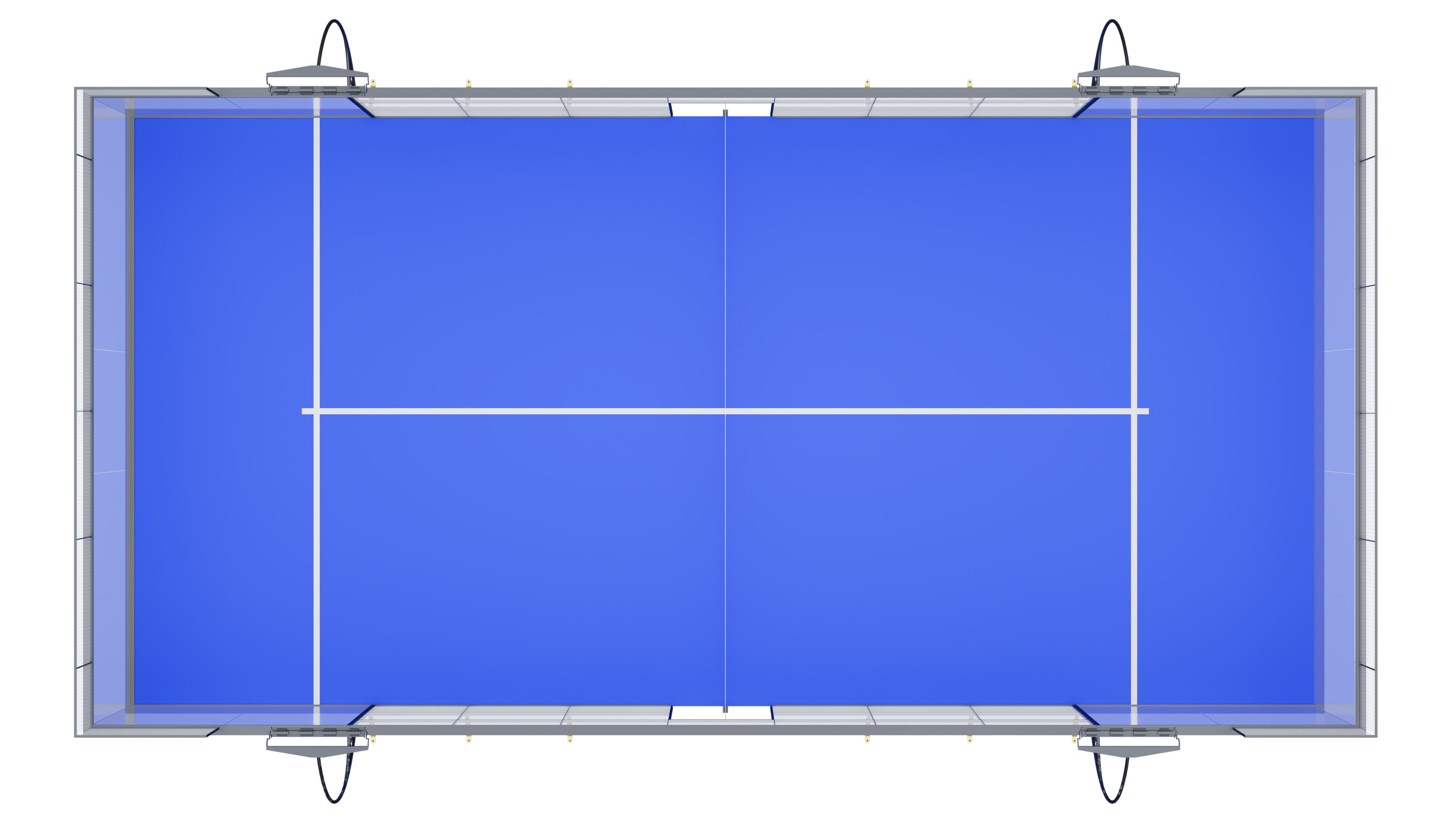
Padel Court Dimensions and Layout: Optimizing Space, Compliance, and Revenue Potential
ITF/FIP Standards vs. Commercial Flexibility: Balancing Official Play Requirements with Scalable Multi-Court Design
According to the International Padel Federation (FIP), standard courts need to measure exactly 20 meters long and 10 meters wide, making a total area of around 200 square meters. This helps keep the ball bouncing consistently during matches and makes sure everyone plays fairly in official competitions. For actual tournaments, these measurements are pretty much set in stone. But many businesses running padel facilities take a more practical stance. The FIP actually allows a small wiggle room of plus or minus 0.5% for recreational courts. This tiny leeway lets operators tweak things just enough to fit more courts into tight spaces, especially in cities where finding good land is tough. Some clever facility owners have started using modular setups with shared frames between courts or stackable walls that can be moved around. These smart designs mean a single location can handle both weekend fun sessions and proper competitions without tearing everything down and rebuilding. The result? About 20% more courts squeezed into the same space, which means happier customers and better business results over time, all while still meeting official standards when necessary.
Buffer Zones, Shared Walls, and Spacing Strategies to Maximize Court Density Without Compromising Player Experience
According to FIP guidelines, there should be at least 3 meters of space behind the baseline and around 2 meters along each side wall for safety buffers. This brings the total area needed for one outdoor court down to roughly 26 meters by 16 meters. When multiple courts are built together, shared walls can cut down on those side buffer requirements and save up to 20% of the overall land space. The layout matters too. Courts arranged in staggered positions with well planned access paths and central service areas help people move around better and avoid bottlenecks. Good design keeps players moving freely while maintaining clear sight lines between different courts. Players appreciate this because it makes them feel more comfortable during play and gives the facility a sense of exclusivity. These factors actually contribute to keeping customers coming back and justify higher prices in busy locations where good facilities are hard to find.
Padel Court Surface and Foundation: Ensuring Durability, Low Maintenance, and All-Weather Availability
Artificial Grass, Acrylic, and Hybrid Surfaces: Performance, Lifespan, and Total Cost of Ownership for Commercial Padel Court Operators
The type of surface installed has a major impact on how happy players are, how much work goes into upkeep, and ultimately what kind of money comes in over time. Most commercial facilities go with artificial turf these days because it works rain or shine, gives pretty consistent ball bounce, and doesn't cost much to keep looking good. Good quality turf can stick around for about 8 to 10 years if we just sweep regularly and give it a quick grooming now and then. Looking at the big picture, maintaining turf courts ends up costing roughly 30 percent less compared to those acrylic surfaces. Acrylic definitely makes for faster gameplay that top level places love, but comes with a serious downside. These courts need complete resurfacing somewhere between once every year and a half to two years, and that'll set operators back anywhere from two grand to four grand per court. Some folks try hybrids that mix turf's toughness with acrylic's speed characteristics, but they start out about 15 to 20 percent more expensive. When facility managers care most about keeping courts open and controlling expenses month after month, turf still stands as the better financial bet, particularly in areas where unpredictable weather often cancels games.
Foundation & Drainage Essentials: Preventing Downtime and Extending Padel Court Asset Life Through Proactive Engineering
Getting the foundation right matters a lot for any project. Concrete slabs need to be built with about a half percent slope across them so water can drain off quickly instead of sitting around and causing damage to surfaces or soaking into the ground beneath. Good drainage systems should be able to cope with heavy rain, handling around 25 liters per square meter per hour when needed most. This usually means having layers of permeable material underneath like crushed stone, plus channels along the edges and catch basins positioned where water tends to collect. Industry reports consistently show that poor drainage is behind about eight out of ten court failures happening before their time. For outdoor areas especially, foundations need to go deep enough below the frost line locally, typically about 12 inches minimum, which helps extend how long these installations last, maybe adding 15 to 20 extra years on average. Inside buildings, putting down special underlay materials that absorb vibrations makes sense too because it cuts down on noise traveling between different parts of the facility. When contractors invest properly in drainage from day one, they tend to save money later on repairs, sometimes cutting maintenance costs by nearly 40%, while keeping operations running smoothly throughout all seasons without interruption.
Enclosure, Net, and Line Systems: Building Consistency, Safety, and Brand Credibility
Strong enclosure systems with walls, fences and overhead nets stop balls from escaping, reduce the chance of injuries, and keep things compliant with FIP standards. Glass that's been reinforced or polycarbonate panels rated for impacts last much longer and stand up better to weather conditions. Facilities see around 40 percent savings on maintenance over time when they install these materials in busy spots. The net needs to stay tight and at the right height too – about 88 centimeters in the middle and 92 at the posts works best. Line markings should resist fading under UV light and regular wear so nobody argues about where the ball landed during play. Getting all these little things right shows real commitment to quality. Players notice when courts are well maintained, coaches appreciate the consistency between games, and league officials respect facilities that follow regulations properly. Courts that look professional and function reliably tend to get booked again and again, generate good reviews from satisfied users, and establish themselves as top choices for serious athletes looking for dependable practice environments.
Indoor vs. Outdoor Padel Court Configurations: Strategic Trade-Offs for Revenue Stability and Market Positioning
Indoor Advantages: Extended Hours, Climate Control, and Ancillary Revenue from Lighting, Acoustics, and Multi-Use Integration
With indoor facilities, there's no need to worry about bad weather messing up operations. They can run all year round even when temperatures swing wildly or rain pours down. The climate control systems keep things just right for playing - around 20 to 24 degrees Celsius with humidity between 40 and 60 percent. This makes balls behave predictably and helps players perform better consistently. The LED lights inside let people play much later into the evenings, which catches that busy time after work when most folks want to get out. There are plenty of other money makers too besides regular play sessions. Some places offer special lighting setups for TV broadcasts, install soundproofing for hosting events and social gatherings, and rearrange floors for different purposes like fitness classes or company team building activities. All these extras mean operators can charge more per hour and still see members signing up for longer periods. This helps smooth out those ups and downs during different seasons and builds trust among competitors looking at what options are available locally.
Outdoor Optimization: Site Selection, Solar/Wind Mitigation, and ADA-Compliant Access Paths for Broad Accessibility
Getting good results outdoors starts with smart choices about where to build and how to work with the environment. Look for spots that already have natural protection from wind like nearby buildings, hills, or established trees. These features cut down on stress on structures and make playing conditions better overall. Positioning courts so they run east to west helps keep sunlight out of players' eyes when it matters most in the mornings and afternoons. Dealing with wind isn't just about building walls either. Permeable fences let air through, angled barriers redirect strong breezes, and planting evergreens strategically can calm gusts without causing unpredictable airflow patterns. Paths need to follow ADA guidelines too. Slip resistant surfaces, gentle slopes no steeper than 1:12, and touch markers help everyone move around easily including people using wheelchairs or dealing with mobility issues. Making spaces accessible isn't just about following laws; it actually opens up new customer groups and builds stronger connections within communities. Sure, outdoor facilities generally cost less upfront and to maintain compared to indoor ones, but unexpected weather problems still require careful planning ahead of time.
FAQ Section
What are the standard dimensions of a Padel court?
The standard dimensions for a Padel court set by the International Padel Federation (FIP) are 20 meters in length and 10 meters in width, translating to a total area of approximately 200 square meters.
How can businesses optimize space for multiple Padel courts?
Businesses can optimize space by utilizing modular setups with shared frames between courts or stackable walls, allowing for about 20% more courts in the same area while adhering to FIP standards.
What types of surfaces are suitable for Padel courts?
Artificial turf is popular due to its durability and low maintenance needs, though some opt for acrylic or hybrid surfaces. Turf has a better long-term cost due to lower maintenance requirements despite hybrid options being initially more expensive.
How important is foundation and drainage in Padel court construction?
Proper foundation and drainage are vital to prevent damage from water pooling and to extend the lifespan of courts, reducing maintenance costs by up to 40%.
Table of Contents
- Padel Court Dimensions and Layout: Optimizing Space, Compliance, and Revenue Potential
- Padel Court Surface and Foundation: Ensuring Durability, Low Maintenance, and All-Weather Availability
- Enclosure, Net, and Line Systems: Building Consistency, Safety, and Brand Credibility
- Indoor vs. Outdoor Padel Court Configurations: Strategic Trade-Offs for Revenue Stability and Market Positioning
- FAQ Section